
Homemade Rosemary Salt Recipe
Introduction
Elevate your cooking with this simple homemade rosemary salt recipe. Combining fragrant fresh rosemary with coarse sea salt, this seasoning blend adds an aromatic touch to any dish. It’s quick to prepare and perfect for finishing meats, vegetables, or even popcorn.
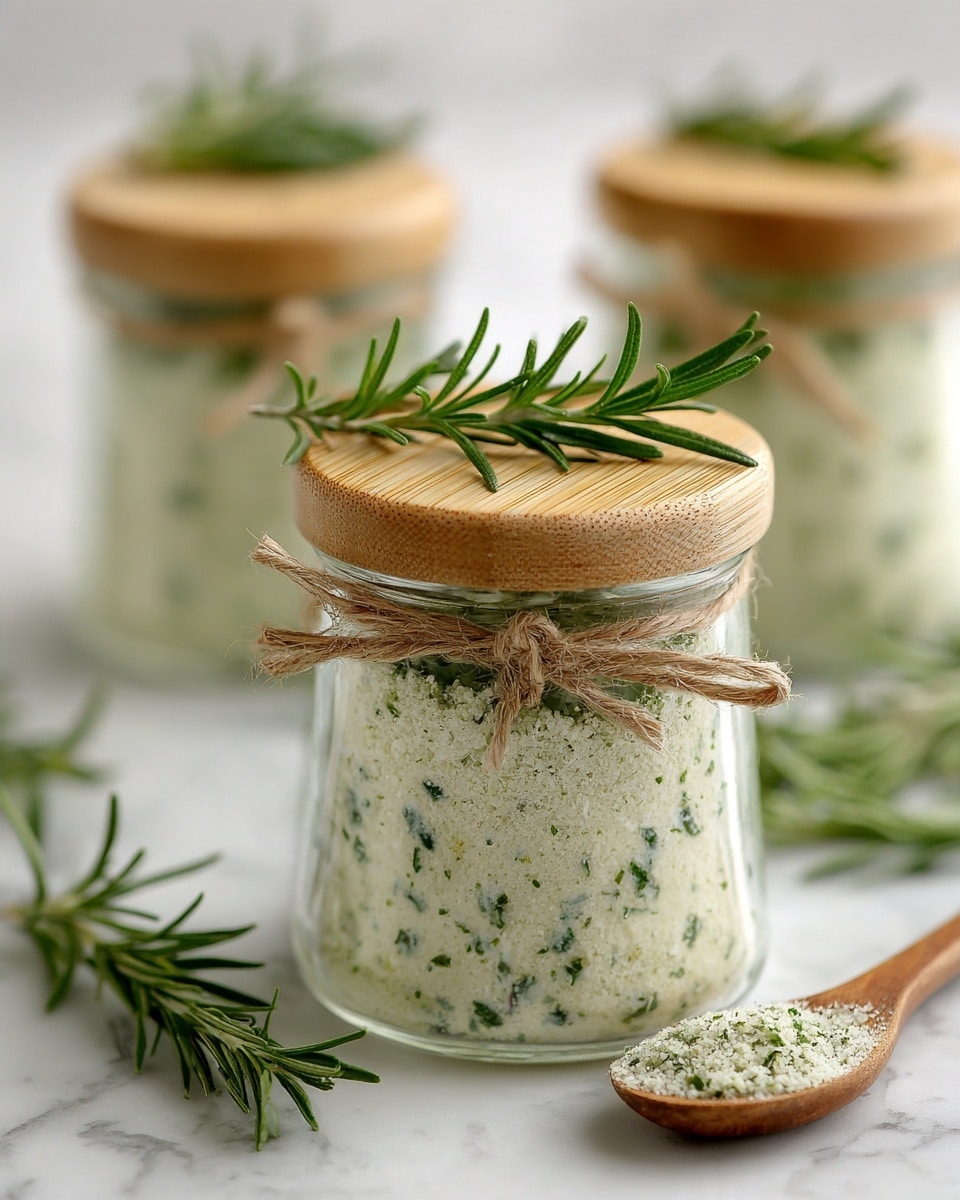
Ingredients
- 1 ½ cups coarse sea salt
- ½ cup fresh rosemary leaves (about 1 6″ sprig)
Instructions
- Step 1: Line a baking sheet with parchment paper and set aside.
- Step 2: Remove the rosemary leaves from the stems until you have ½ cup of leaves.
- Step 3: Place the sea salt and rosemary leaves into the bowl of a food processor fitted with an S-blade or into a blender jar.
- Step 4: Pulse until the salt reaches your desired texture; leaving it slightly chunky works well as a finishing salt.
- Step 5: Spread the mixture evenly on the prepared baking sheet and place it in the oven with the light on for about 2 hours, stirring at least once, until completely dried.
- Step 6: Alternatively, if you prefer not to use the oven, let the salt dry at room temperature for 4–5 hours, stirring occasionally.
- Step 7: Test the dryness by rubbing some salt between your fingers; if it clumps, it needs more drying, but if it spreads like sand, it’s ready.
- Step 8: Transfer the dried rosemary salt to an airtight container for storage.
Tips & Variations
- For a finer texture, pulse the salt and rosemary for longer, but be careful not to turn it into powder.
- Try using different coarse salts like French Grey or kosher salt for subtle flavor differences.
- Adjust the ratio of rosemary to salt depending on your taste; a 1:3 ratio works well but feel free to experiment.
Storage
Store your rosemary salt in a cool, dark place, such as a spice cupboard, in an airtight container. It’s best used within 3 to 6 months for optimal flavor, though it can last indefinitely if kept dry and sealed properly. Use it to season dishes anytime you want a burst of herbal saltiness.
How to Serve
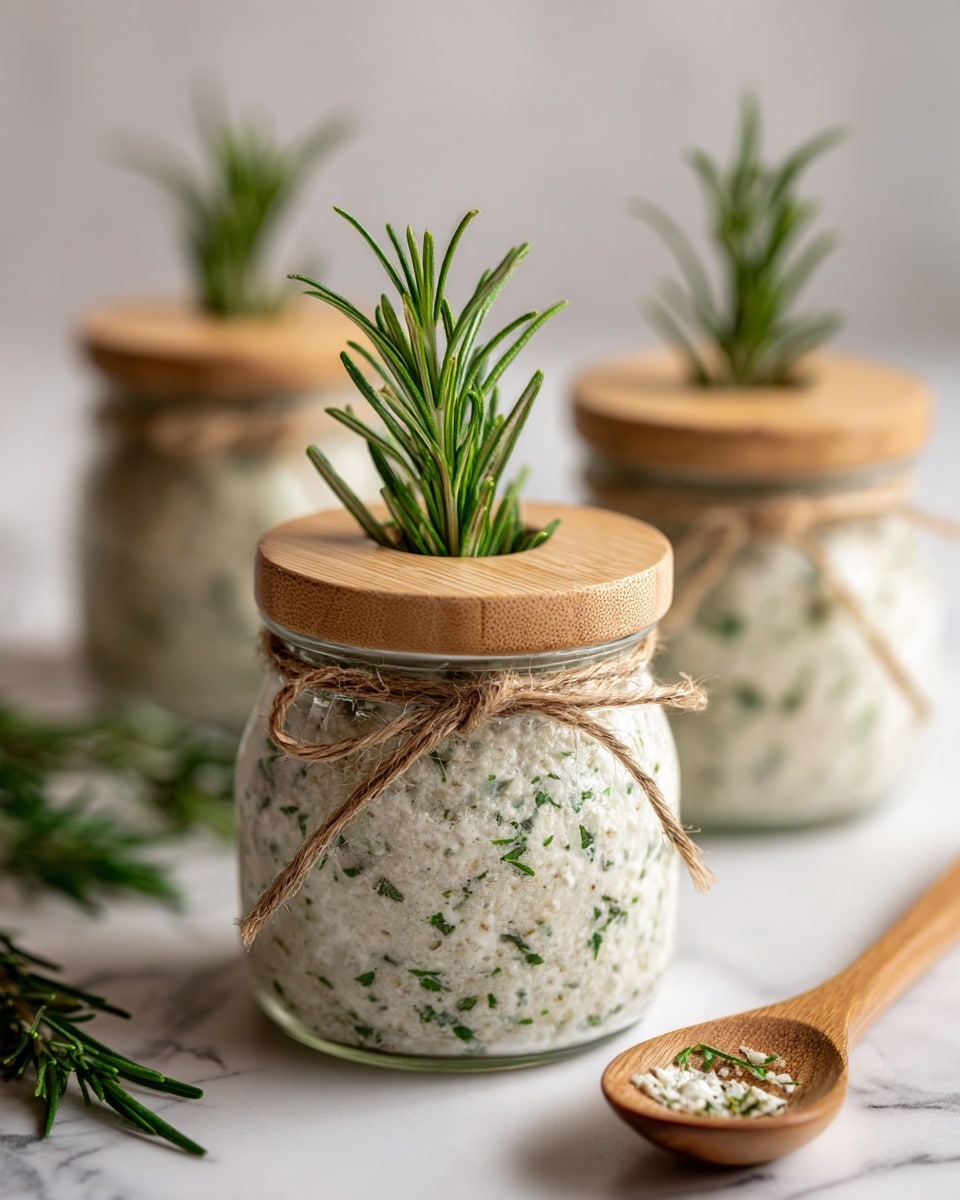
Serve this delicious recipe with your favorite sides.
FAQs
Can I use dried rosemary instead of fresh?
While fresh rosemary provides a more vibrant flavor and aroma, dried rosemary can be used in a pinch. Use about half the amount of dried rosemary since it’s more concentrated, and consider blending it a bit longer to incorporate evenly.
How should I use rosemary salt in cooking?
Rosemary salt is great as a finishing salt for grilled meats, roasted vegetables, salads, and even popcorn. Sprinkle it on dishes right before serving to preserve its fragrant flavor and crunchy texture.
PrintHomemade Rosemary Salt Recipe

This easy homemade rosemary salt recipe combines fresh rosemary leaves with coarse sea salt to create a fragrant and flavorful seasoning blend. Perfect as a finishing salt, it adds a delightful herbal touch to a variety of dishes, enhancing their flavor in just minutes.
- Prep Time: 5 minutes
- Cook Time: 2 hours
- Total Time: 2 hours 5 minutes
- Yield: 84 teaspoons 1x
- Category: Blended
- Method: Blending
- Cuisine: American
Ingredients
Ingredients
- 1 ½ cups coarse sea salt
- ½ cup fresh rosemary leaves (from about 1 6″ sprig)
Instructions
- Prepare Baking Sheet: Line a baking sheet with parchment paper and set it aside to use later for drying the salt mixture.
- Remove Rosemary Leaves: Strip the rosemary leaves from the stems until you have 1/2 cup of fresh leaves ready to use.
- Blend Ingredients: Place 1 1/2 cups of coarse sea salt and the fresh rosemary leaves into a food processor fitted with the S-blade, or alternatively into a blender jar.
- Pulse Until Desired Texture: Pulse the salt and rosemary mixture until the salt reaches your preferred consistency. Leaving it chunky works well for a beautiful finishing salt.
- Dry the Salt Mixture: Spread the blended rosemary salt evenly onto the prepared baking sheet. Place it in the oven with the oven light on (without turning the heat on) for approximately 2 hours, stirring at least once to help it dry completely. Alternatively, dry at room temperature for 4-5 hours, stirring occasionally.
- Check Dryness: Check if the salt mix is fully dried by rubbing some between your fingers—if it clumps, it needs more drying; if it feels sandy and free-flowing, it is ready.
- Store the Rosemary Salt: Transfer the completely dried rosemary salt into an airtight container for storage.
Notes
- Batch Size: This recipe yields about 1 1/2 cups of rosemary-infused salt and can easily be scaled up or down while maintaining a 1:3 rosemary to salt ratio.
- Storage: Store the rosemary salt in a cool, dark place such as a spice cupboard. It’s best used within 3-6 months for optimal flavor but will keep indefinitely if stored properly.
- Recommended Equipment: Use a Cuisinart food processor or a blender for best results.
- Recommended Ingredients: French Grey Sea Salt, Morton Coarse Kosher Salt, organic rosemary.
Keywords: rosemary salt, homemade seasoning, herbal salt, finishing salt, rosemary recipe, infused salt