Salmon with Lemon Cream Sauce Recipe
Introduction
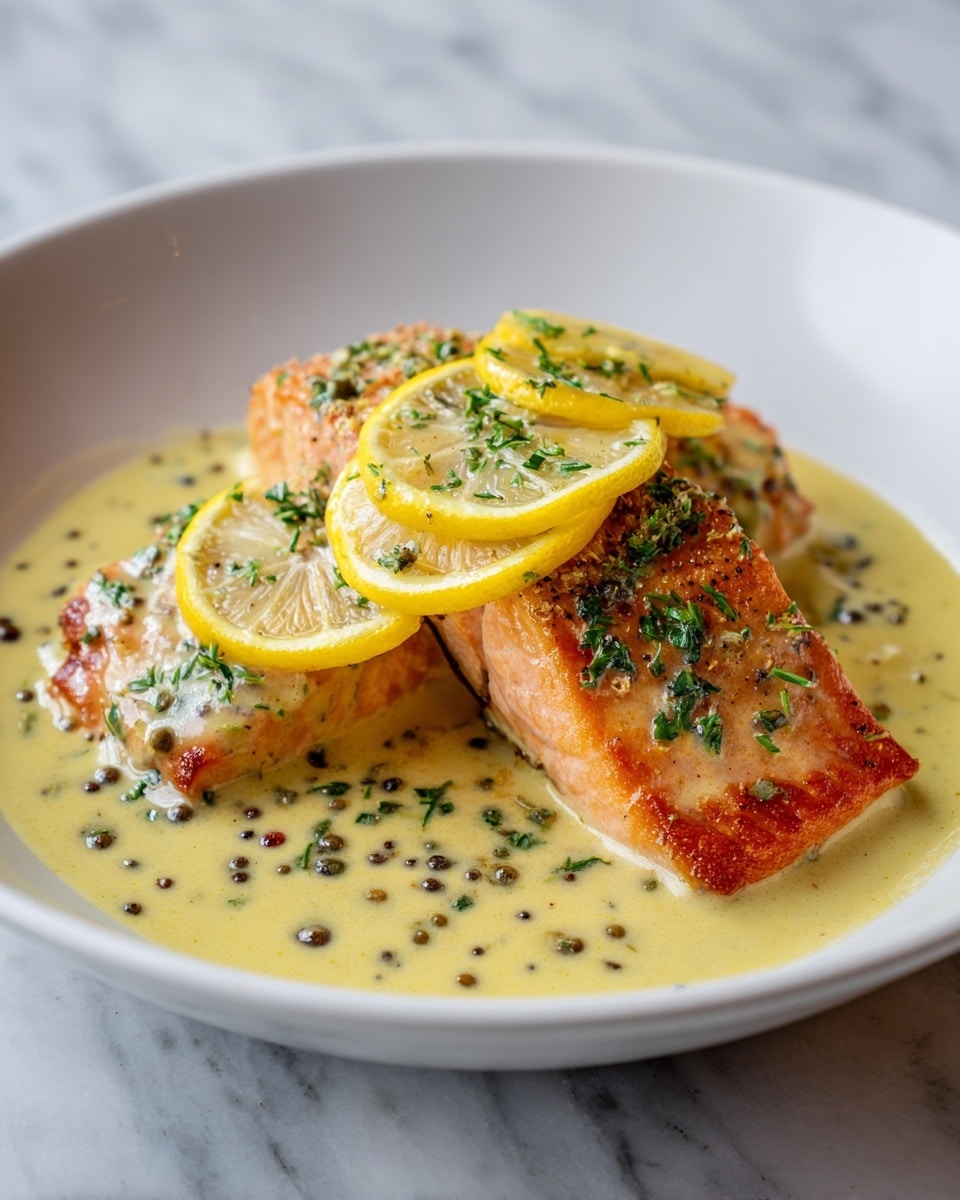
Salmon with Lemon Cream Sauce is an elegant yet simple dish perfect for any occasion. Tender salmon fillets are topped with a silky, bright lemon cream sauce that enhances the natural flavor of the fish. Ready in about 30 minutes, this recipe is a quick way to enjoy a restaurant-quality dinner at home.
Ingredients
- 4 salmon fillets (about 6 ounces/170g each)
- 2 tablespoons olive oil
- 1 teaspoon garlic powder
- 1 teaspoon paprika
- 1 teaspoon dried parsley
- ½ teaspoon salt
- ½ teaspoon black pepper
- 2 tablespoons unsalted butter
- 4 cloves garlic, minced
- 1 cup heavy cream
- ½ cup low-sodium chicken broth or seafood stock
- ½ cup freshly grated Parmesan cheese
- 2 tablespoons fresh lemon juice
- 1 teaspoon lemon zest
- 1 teaspoon Dijon mustard
- ¼ teaspoon black pepper
- Salt, to taste
- Optional garnishes: fresh parsley, lemon slices, extra Parmesan cheese, fresh dill
Instructions
- Step 1: Pat the salmon fillets dry with paper towels and season both sides with garlic powder, paprika, dried parsley, salt, and black pepper.
- Step 2: Heat olive oil in a large skillet over medium-high heat. Place salmon skin-side down if skin is on. Cook for 4–5 minutes, then flip and cook for another 3–4 minutes until salmon flakes easily with a fork and reaches 145°F (63°C). Remove salmon to a plate.
- Step 3: Reduce heat to medium. Add butter to the skillet. Once melted, stir in minced garlic and cook for about 30 seconds, stirring constantly.
- Step 4: Pour in chicken broth or seafood stock and heavy cream, stirring to scrape up browned bits from the skillet bottom.
- Step 5: Add Parmesan cheese, Dijon mustard, lemon zest, and black pepper. Whisk until the cheese melts and the sauce is smooth.
- Step 6: Stir in fresh lemon juice and adjust seasoning with salt or pepper as needed.
- Step 7: Return the cooked salmon to the skillet, spoon the sauce over each fillet, and simmer gently for 2–3 minutes.
- Step 8: Garnish with fresh parsley or dill and serve immediately with lemon wedges.
Tips & Variations
- Pat salmon dry before seasoning to get a crisp crust.
- Avoid moving salmon too much while searing for a golden crust.
- Use freshly squeezed lemon juice and freshly grated Parmesan for the best flavor and sauce texture.
- Simmer sauce gently after adding cheese to prevent separation.
- Add fresh spinach, asparagus, or mushrooms to the sauce for extra vegetables.
- For a spicier twist, substitute paprika with Cajun seasoning.
- Try the sauce over baked salmon for an alternative cooking method.
Storage
Store cooled leftovers in an airtight container in the refrigerator for up to 3 days. Reheat gently over low heat or in the microwave at reduced power to prevent the sauce from separating. If it thickens too much, stir in a splash of broth or cream while reheating. While the salmon can be frozen for up to 2 months, cream sauces may separate slightly after thawing, so it’s best enjoyed fresh or refrigerated.
How to Serve
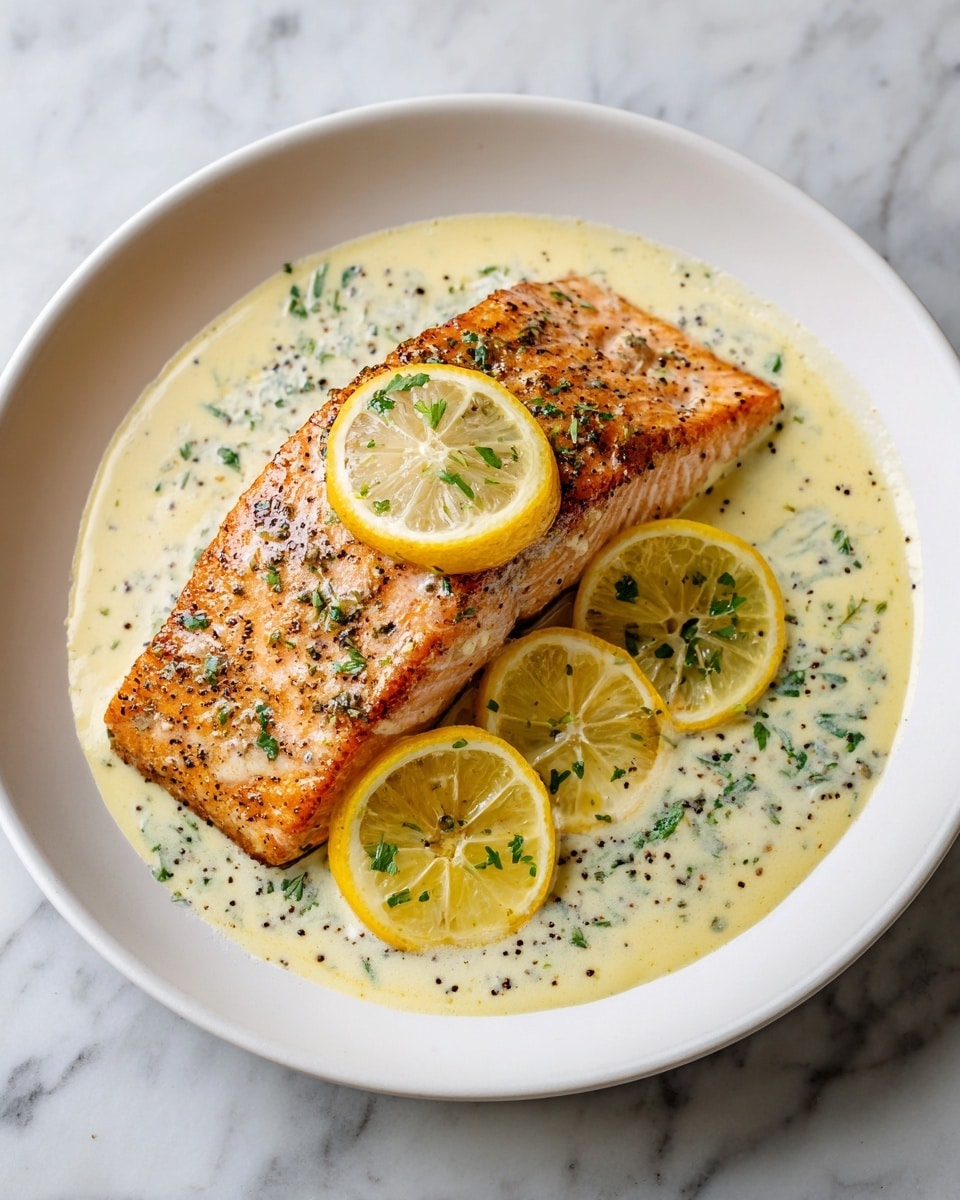
Serve this delicious recipe with your favorite sides.
FAQs
Can I use frozen salmon?
Yes. Just thaw it completely and pat dry before seasoning and cooking.
How do I know when salmon is done?
Salmon flakes easily with a fork and reaches an internal temperature of 145°F (63°C).
PrintSalmon with Lemon Cream Sauce Recipe

Salmon with Lemon Cream Sauce is an elegant yet simple recipe featuring perfectly seared salmon fillets topped with a silky lemon-infused cream sauce made with garlic, Parmesan cheese, and fresh herbs. Ready in 30 minutes, this dish balances rich, tender salmon with bright citrus flavors, making it perfect for both busy weeknights and special occasions.
- Prep Time: 10 minutes
- Cook Time: 20 minutes
- Total Time: 30 minutes
- Yield: 4 servings 1x
- Category: Main Course
- Method: Stovetop
- Cuisine: American
- Diet: Low Carb
Ingredients
For the Salmon
- 4 salmon fillets (about 6 ounces/170g each)
- 2 tablespoons olive oil
- 1 teaspoon garlic powder
- 1 teaspoon paprika
- 1 teaspoon dried parsley
- ½ teaspoon salt
- ½ teaspoon black pepper
For the Lemon Cream Sauce
- 2 tablespoons unsalted butter
- 4 cloves garlic, minced
- 1 cup heavy cream
- ½ cup low-sodium chicken broth or seafood stock
- ½ cup freshly grated Parmesan cheese
- 2 tablespoons fresh lemon juice
- 1 teaspoon lemon zest
- 1 teaspoon Dijon mustard
- ¼ teaspoon black pepper
- Salt, to taste
Optional Garnishes
- Fresh parsley
- Lemon slices
- Extra Parmesan cheese
- Fresh dill
Instructions
- Prepare the Salmon: Pat the salmon fillets dry with paper towels. Season both sides with garlic powder, paprika, dried parsley, salt, and black pepper to ensure a well-flavored crust.
- Sear the Salmon: Heat olive oil in a large skillet over medium-high heat. Place the salmon fillets skin-side down if they have skin. Cook for 4–5 minutes until golden brown, then carefully flip and cook another 3–4 minutes, or until the salmon flakes easily with a fork and reaches an internal temperature of 145°F (63°C). Transfer the salmon to a plate.
- Make the Garlic Base: Reduce heat to medium. Add unsalted butter to the skillet and melt it. Stir in the minced garlic and cook for about 30 seconds while stirring constantly, releasing aromatic flavors without burning the garlic.
- Add the Liquids: Pour in the low-sodium chicken broth or seafood stock and heavy cream. Stir while scraping up the flavorful browned bits from the bottom of the skillet to enrich the sauce.
- Season the Sauce: Add freshly grated Parmesan cheese, Dijon mustard, lemon zest, and black pepper. Whisk continuously until the cheese melts fully and the sauce becomes smooth and creamy.
- Finish with Lemon: Stir in fresh lemon juice to brighten the sauce. Taste and adjust seasoning with salt and additional pepper as needed for balance.
- Return the Salmon: Place the cooked salmon back into the skillet. Spoon the lemon cream sauce over each fillet and simmer gently for 2–3 minutes to allow flavors to meld and the salmon to warm through.
- Garnish and Serve: Sprinkle with fresh parsley or dill. Serve immediately with optional lemon wedges for added citrus brightness.
Notes
- Pat salmon dry before seasoning to achieve a crisp crust.
- Avoid moving salmon too much while searing to prevent breaking the fillets.
- Use freshly squeezed lemon juice and freshly grated Parmesan for the best flavor and texture.
- Simmer the sauce gently after adding the cream and cheese to prevent separation.
- Do not overcook the salmon; it continues to cook slightly after removal from heat.
- Add fresh herbs at the end for optimal flavor impact.
- Let the salmon rest briefly before serving for juicier results.
- Leftovers can be refrigerated for up to 3 days; reheat gently to preserve sauce texture.
Keywords: salmon, lemon cream sauce, seared salmon, easy seafood recipe, creamy lemon sauce, quick dinner, one skillet meal, healthy salmon recipe